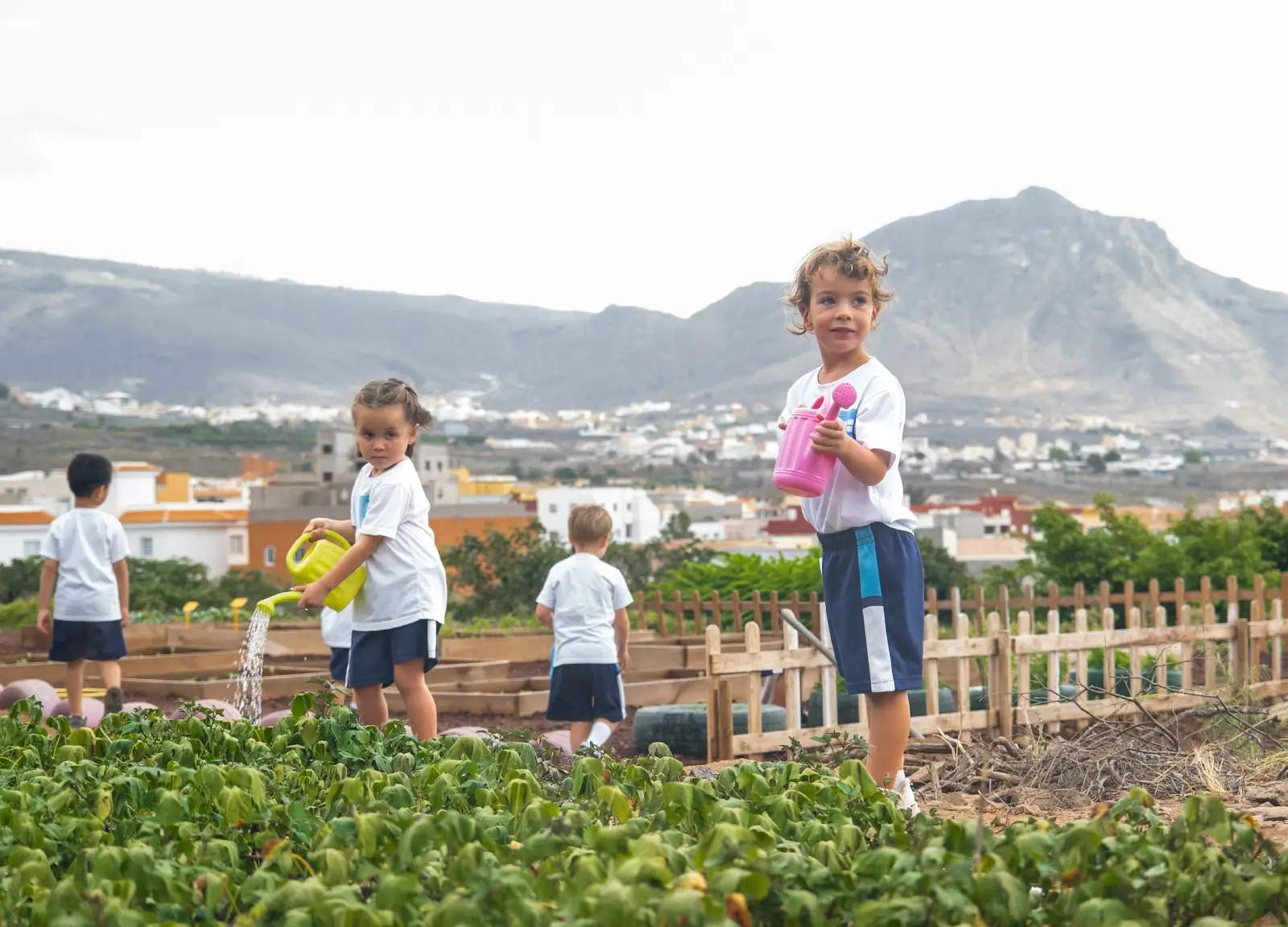
We offer a comprehensive and well-rounded curriculum based on the British National Curriculum. Throughout the academic year, our staff present a variety of learning challenges that encourage children to solve problems, engage in creative thinking, and effectively express their knowledge and understanding. Additionally, our students benefit from outstanding opportunities in music, drama, and sport, fostering teamwork, independence, and resilience. Our exceptional wellbeing support ensures that every child feels valued and nurtured within our community, helping them develop into confident and unique individuals.
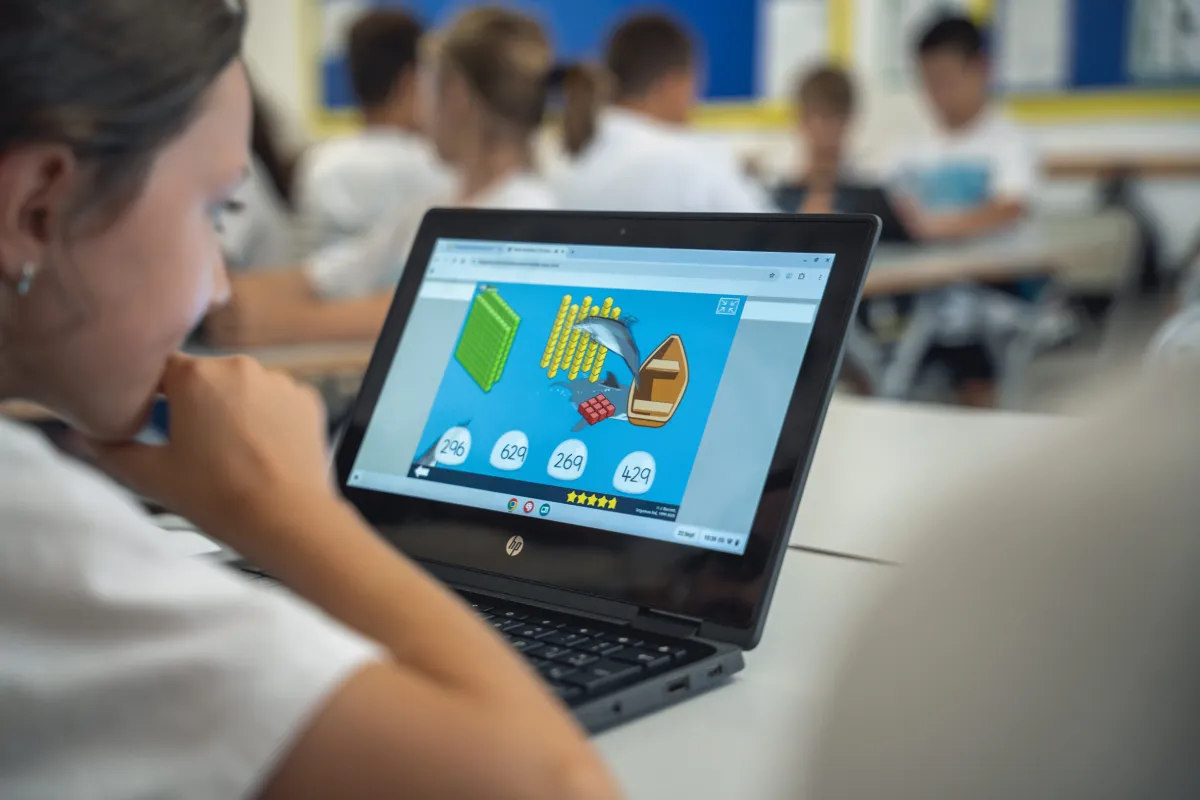
Curriculum overview
The essence of the Wingate Education
“Our Primary Department is where a child’s learning journey begins. Providing education from Year 1 through to Year 6, we aim to ensure all children develop their confidence and make outstanding progress in their learning. Our dedicated, experienced and enthusiastic staff provide classroom environments that ensure high standards and high expectations of our children are achieved, not just in their academic ability but also in their behaviour and attitudes.”
Year 1 – Key Stage 1
Autumn Term – Throughout the year the English Curriculum will be enriched through role play, experience days and retelling stories through drama and using our small world area. During the first half term we will be setting our expectations for writing in books and focusing on letter formation and writing sentences using capital letters, finger spaces and full stops. We will begin to build a repertoire of stories, poems and songs that we can retell, recite and sing from memory. During the first half term our topic is Marvellous me. We will be exploring some lovely stories that focus on being special and celebrating differences. All of our writing during this half term will stem from these stories. We will be practising the poem ´The Nut Tree´ by Julia Donaldson in anticipation of our Poetry Performance. In Autumn 2 we will be exploring a beautiful poem called When I´m By Myself. We will use this poem as inspiration to write our own poems using features such as metaphors and rhyming words. As Christmas approaches we will investigate the features of letters and lists in order to send letters to Father Christmas and our Cheeky class elf.
Spring Term – Throughout the Spring term we will be covering two short topics. In the first half term, the children will be immersed in the world of Toys and the second half term will be focused all around our Wonderful World. In Autumn 1 we will be sharing some lovely stories about toys and retelling the traditional tale of Pinnochio.
In Wonderful World we will explore stories based in space and a range of different writing styles including letters and non chronological reports will stem from this. Our Poetry performances for this half term will be ‘If you should meet a crocodile’ by Christina Fletcher and ‘The Garden Year’ by Sara Coleridge.
Summer Term – In the Summer term we will be embarking on The Adventures of Paddington where we will explore all things British. We will be writing an adventure narrative based on The Queen’s Hat, writing instructions for making Paddington’s favourite sandwiches and writing lists, using commas and bullet points, all while including the fundamentals for writing that we have been building on all year. We will be partaking in British traditions such as making and tasting English tea. This will tie in with our History and Geography learning about the British seaside and The Royal Family. Our Poetry Performance for Summer 1 will be ´Pirate Pete´ by James Carter.
Autumn Term – In Maths this term we will be sorting and counting objects and representing objects in different ways. We will be starting to recognise and write numbers in words as well as in numeral form. We will be counting forwards and backwards and be able to say what is one more and one less. We will be comparing numbers and groups and be able to order numbers.
Spring Term – In the first half of the Spring term, we will be focusing on our Addition and Subtraction within 20 and our Place Value up to 50. The children will be discovering how we can hold a number in our heads and count on it to get our answer. For example, if we are doing the question 7 + 3, the children will learn how to hold 7 in their head and count 8, 9, 10 to get their answer. We will also be consistently reviewing number families to ensure the children can build their speed of adding and taking away mentally. Place Value will be a big focus to ensure the children are able to recognise what numbers are made up of. For example, that 18 is made up of one ten and eight ones.
As part of Measurements, we will be exploring Length and Height and Volume and Weight by initially using non-standard measurements such as cubes, paper clips etc. and then moving onto using standard measures like centimetres, grams etc.
Summer Term – In Maths this term we will be focusing on Multiplication and Division. We will be using practical equipment to explore these concepts before showing that we can do them pictorially. We will then move on to exploring fractions. The children will be given lots of opportunities to explore the concept practically. We will also be looking at Position and Direction, The children will be able to give simple directions and describe the position of objects eg. The shoe is underneath the table. We will then revisit our previous learning on place value and build on this further. We will finish the year looking at Time.
Autumn Term – In Science this term we will be able to identify and name a variety of animals and talk about what they eat, where they live and some of their features. We will then be able to sort them into groups and make comparisons between these groups. We will also be looking at the human body and be able to name and label the body parts.
Spring Term – During Spring, term one, we will be exploring Everyday materials. The children will be discovering names of materials and what objects are made from certain materials. They will learn how to identify, compare and describe some of the materials that they learn about. Through Spring, term two, we will be learning all about Plants. We will explore common wild plants and garden plants, including deciduous and evergreen trees. The children will work hard to be able to identify and describe the structures of these.
Summer Term – In the Summer term we will be learning about the seasons and their changes. We will be reflecting on how the weather changes throughout the seasons and how the length of day varies.
Autumn Term – In Geography we look at our local area, especially the school and introduce geographical vocabulary such as aerial view, compass points and map skills. We will be reflecting on the journey of our lives and talking about significant events and changes that have happened within our living memory. We will also be celebrating Remembrance Day and learning about the significance of the poppy.
Read Less
Spring Term – For the first half of Spring, we will be exploring all about the first aeroplane flight in History as part of our Toys topic! We will be discovering who invented it and all about them, as well as how it works. This will even tie into our Art and DT, where we will be making our very own wooden aeroplane!
During the second Spring term, Wonderful world, we will be learning all we can about Sir David Attenborough. We will be looking at his life, places he has visited, and most importantly, his message for the world and what he believes.
In Geography, we will be looking at Continents of the World. We will learn how to use a map so that we can identify, name and locate the seven continents, whilst also thinking about the weather they get in relation to their distance from the North and South poles
Summer Term – In Geography our focus will be on The United Kingdom discussing aspects of physical and human geography, capital cities and traditions. In History, we will be looking at Kings and Queens of England. The children will have experience days where they have the opportunity to engage in British traditions in order to understand how lives can be different. We will also be looking at the Guanches near Dia de Canaria so the children can understand how they relate to Tenerife and themselves.
Year 2 – Key Stage 1
Autumn Term – This term we will be reading a non-chronological report and a fictional story with a familiar setting. There will be an opportunity to consolidate punctuation skills taught in Y1, such as using capital letters and full stops correctly, before learning how to use question marks and commas in lists.
Grammatical terms will be reviewed and introduced, for example nouns, verbs and adjectives. Also, this term we will learn about the punctuation needed for writing speech and improving our vocabulary by identifying synonyms for ‘said’. We will begin to plan ideas before writing, using the features taught from each genre, and reread our sentences to check they make sense.
Spring Term –This term we will be exploring Diaries, Instructional writing and Poetry. There will be a focus on developing their writing through the consistent use of full stops and capital letters, adjectives and adverbs. Within non-fiction we will be exploring the tools needed to write a diary entry and a set of instructions. At the end of the term, Year 2 will experiment with different aspects of poetry, including writing their own acrostic poems. Weekly SPAG (Spelling, Punctuation and Grammar) lessons will allow focused time on improving these skill sets. Whole Class Comprehension lessons will support children to understand what they have read and be able to answer questions based on the text through a variety of activities.
Summer Term – To start the term, we will read an example of a Free Verse Poetry called ‘If I were in Charge of the World’. We will then practise performing it by reading it aloud and using actions to help us remember it. This will then lead us on to planning and writing our own poem following a similar structure. During the second half of the term, we will be reading and learning ‘George and the Dragon’ written by Christopher Wormell. This will involve learning some new vocabulary and using drama to help us remember it before planning and writing our own legend. We will also continue to learn and apply spelling, punctuation and grammar skills including expanded noun phrases used in descriptions; punctuation needed for writing speech; and conjunctions used in compound sentences.
Autumn Term – This term we will be focusing on Place Value as well as Addition and Subtraction. This will include recognising the value of each digit in a 2-digit number, comparing and ordering numbers to 100 using the greater/ less than and equals symbols, reading and writing numbers to 100 in numerals and words.
Additionally, the children will deepen their knowledge and understanding of numbers to 20 by developing mental strategies to solve addition and subtraction. They will be taught that addition can be solved in any order (commutative) but subtraction cannot, as well as being able to recognise the inverse relationship between them. Some children will be able to apply this knowledge to help them solve problems, such as solving missing number calculations.
Spring Term – During the beginning of Spring Term, we will be focusing on Multiplication and Division in Maths. The children will become more familiar with the 2, 5 and 10-times tables, as well as being introduced to the 3 times table. We will focus on developing a deeper understanding of what it means to multiply and divide and ways in which we can visually see this, providing the children with a variety of ways to tackle future mathematical problems. Throughout this, we will continue to learn about commutative law, moving away from addition and now apply this to multiplication. Some children will acquire an understanding of how we can use the inverse calculation to check our answers. Additionally, we will also be exploring Fractions, Statistics and Shape. Throughout Fractions we will be learning the appropriate vocabulary and what it means. The children will be taught how to find, recognise and make fractions, as well as build an understanding of unit and non-unit fractions. Our learning on Statistics will be centred around developing an understanding of how to read and interpret the data from different sources, such as pictograms and tally charts. We will then learn how to use this data to form conclusions to mathematical problems. Additionally, we will learn how to draw different charts to show information. During the area of Shape, we will be covering how to recognise and make 2D and 3D shapes, the properties of them, how to draw them and lines of symmetry.
Summer Term – We are beginning the summer term with Fractions. Throughout Fractions we will be learning the appropriate vocabulary and what it means. The children will be taught how to find, recognise and make fractions, as well as build an understanding of unit and non-unit fractions. Additionally, during summer term 1, we will be covering the area Measurement: Length and Height. The children will be taught the following skills: choosing and using appropriate units to estimate and measure length and height and comparing and ordering length and height. Later in Summer 2, Position and Direction will be an area that we cover. As part of this, the children will discover how to order and arrange mathematical objects into patterns and sequences, as well as use mathematical vocabulary to describe position, direction and movement. Then moving on to Measurement: Time where we will learn to tell and write the time to five minutes, including quarter past/to the hour, to show the given time on a blank clock face and understand the number of minutes in an hour and the number of hours in a day. Finally, we will end this year by learning all about Measurement: Mass, capacity and temperature. The children will be taught how to choose and use appropriate standard units to estimate and measure mass, temperature, capacity to the nearest appropriate unit, using a variety of equipment and be able to compare and order the units appropriately.
Autumn Term – This term we will be learning about Living things and their Habitats, where we will learn about a variety of habitats and the plants and animals that live there. We will learn to tell the difference between things that are living, dead and things that have never been alive. We will have the opportunity to make observations of a local habitat and the creatures that live there, investigating conditions in local microhabitats and how they affect the minibeasts found within them.
This topic allows children to research a range of global habitats and how the living things that live there are suited to their environments. Also this term we will be learning about Uses of Everyday Materials, including wood, plastic, metal, glass, brick, paper and cardboard. We will then move on to compare the suitability of different everyday materials for different purposes. We will explore how objects made of some everyday materials can change shape and how the recycling process is able to reuse some everyday materials numerous times.
Spring Term – We will continue to learn about Plants where we will set up a comparative experiment to observe what conditions plants need to grow well, and watch the germination process first hand. and understanding the life cycle of a plant. We will also have the opportunity to closely study plants and trees in the natural environment, taking measurements and making observational drawings. We will begin to learn about plants we eat, and understand that farming involves creating the right conditions for food crops to grow. As we move through the term, we will then learn about Animals including Humans. The children will have the opportunity to learn about how humans and other animals are born, grow and change, and what we need to survive and be healthy. They will classify different kinds of animal babies and learn about the basic needs that are shared by humans and animals.
Summer Term – During the first half of the summer term, we look at the Environment. The children will be introduced to the ecological challenges that face the modern world. Children undertake a range of activities that challenge them to engage with environmental issues and to understand the simple changes we can make to live more sustainable lives. Throughout the unit, learning is closely focused on the Working Scientifically strand of objectives, providing a range of opportunities for children to apply practical scientific methods and skills. During the second half of the term, we will look at important Scientists and Inventors. We will learn all about famous scientists and inventors linked to the Year 2 science curriculum. Children Will learn about the invention of the waterproof coat, and will explore other waterproof materials by carrying out simple tests. Children will also find out about the work of doctors, and will learn about Elizabeth Garrett Anderson, the first woman doctor in Britain. Throughout the unit, children will work in a fun and hands-on way to learn about scientists and inventors.
Autumn Term – Our first topic this term is Animal Kingdom. During this topic we will identify geographical similarities and differences between two contrasting localities of the UK and an African country. Our next topic is Land Ahoy! where we will be learning about Grace Darling and the importance of Lighthouses. We will also have the opportunity to design, create and evaluate our own lighthouse model.
Spring Term – In History we will be continuing to study The Great Fire of London, using all the information we have learned to help us create our very own non-fiction book. We will also produce effective silhouette pictures of London. In Geography our focus will be on Food Around the World. The children will have the opportunity to research different countries, finding out what food is grown there and any speciality dishes.
Summer Term – In Summer 1, we will be discovering all things Planet Earth. We will be starting this topic by looking very close to home… Wingate! The children will learn about the history of Wingate in the last 20 years and interview one of our very own members of staff who can tell us everything that we need to know. We will then progress this further by looking at the geography of the school, create our own aerial map and key of part of our school and develop skills for using maps. Finally, we will extend map skills further by recapping our knowledge of the continents around the world and looking at hot and cold climates. Throughout Summer 2, we are looking at Castles. In this topic we will be discovering all about the history of well-known castles, knights and attacks and defences.
Year 3 – Key Stage 2
Autumn Term – STONE AGE BOY
Year 3 will start the term by developing their basic punctuation skills, recognising present and past tense verbs, using coordinating conjunctions, time adverbials, alliteration, and structuring paragraphs when writing.
STREET BENEATH MY FEET
The children will end the term by showcasing their learning in Science. Year 3 will write an Explanation Text about the Earth and how it is composed.
This unit will focus on how to write an explanatory text and include features such as; labelling diagrams, clauses, as well as question and answers. Additionally they will develop creative and descriptive settings within their writing through the use of effective adjectives and expanded noun phrases.
Spring Term – TRAGEDY NARRATIVE FLOOD
To kick off the Spring term, we will add to our narrative writing arsenal by creating a Tragedy Story linked closely to this term’s topic ‘Clashing Climates’. During this unit of writing, we will focus on developing skills such as: using an apostrophe to show possession, using a drop-in clause to add detail to our sentences and expanding our knowledge of dialogue and its role in ‘showing’ (not telling) details about characters.
Following this, we will begin work on Image Poetry generating alliteration, similes and metaphors for the colours of the world as well as using alliteration to describe them to a boy who ‘cannot see’.
Summer Term – Writing a Mythical Narrative
This will build upon skills they already have in their narrative writing toolkit, as well as extending their repertoire of conjunctions to create varied and effective complex sentences. The children will also be challenged to use their five senses to describe, alliteration, repetition, ellipsis and figurative language to create an effect of suspense for the reader. Year 3 will also aim to improve their use of dialogue to ‘show not tell’ additional details about their characters. The children will finish the term with a non chronological report showcasing their knowledge about Ancient Greece.
SPAG (Spelling, Punctuation and Grammar) lessons will be embedded throughout the year to ensure the improvement of the children’s skills when writing. Furthermore, Whole Class Guided Reading sessions and Comprehension lessons will develop deduction and inference skills whilst encouraging the children in providing reasoned justifications for their views using evidence from the texts they’ve read. Additionally, Whole Class Guided Reading sessions and Comprehension lessons will develop deduction and inference skills whilst encouraging the children in providing reasoned justifications for their views using evidence from the texts they’ve read.
Autumn Term – The focus at the start of the term will be on Place Value in Maths. The children will become more familiar with reading and writing numbers up to 1000. They will then move onto Addition and Subtraction. Here, Year 3 will focus on adding and subtracting numbers mentally, as well as developing their fluency when using the columnar method.
To finish the term, the children will be looking at Multiplication and Division. Our focus will be x2, x3, x4, x5 x8 and x10 facts. The children will be using these times table facts in order to multiply and divide mentally, whilst also discovering how to write multiplication and division number equations.
Spring Term – We will continue focusing on Multiplication and Division at the start of the Spring Term. The children will begin to use the formal written method for multiplication, whilst gaining an understanding of commutative law in relation to this. Using the inverse calculation to check their answers will also be a skill that Year 3 will acquire. Additionally, we will also be exploring Fractions and Measurement. Throughout our fractions work, the children will be learning and using the appropriate vocabulary and know the corresponding definitions. They will also begin to recognise fractions from diagrams and ultimately be able to find fractions of a whole. Year 3 will then begin learning about Measurement, starting with Money and Length. Our final topic will be Time where the children will discover how to tell and write the time from an analogue clock, including using Roman numerals.
Summer Term – We will continue to develop their understanding of Fractions by moving onto expressing tenths as decimals, exploring equivalency and subsequently adding and subtracting fractions. Year 3 will then begin learning about Properties of Shape and study areas of Measurement including Mass and Capacity. Throughout Shape, we will be investigating angles and recognising/describing 2-D and 3-D shapes. When studying Mass and Capacity, the children will aim to measure/compare weight and volume using the appropriate tools. They will also become capable of adding and subtracting mass and capacity. Towards the end of the year, Year 3 will extend their knowledge of Statistics so they can interpret and present data using bar charts, pictograms and tables.
Autumn Term – Our first unit of study in Science will be exploring the properties of Rocks and Soil. They will work using a hands-on approach to compare and group different kinds of rocks on the basis of their simple physical properties. Finally, they will learn about the process of fossil formation and the life of the celebrated palaeontologist Mary Anning.
After half term the children will investigate Forces and Magnets, considering forces in action and exploring magnetism.
Spring Term – As we begin the term, Year 3 will learn about Plants. The children will have the opportunity to learn about the requirements of plants for life and growth, as well as to carry out experiments into the different roles of different parts of a flowering plant. They will work using a hands-on approach to explore the process of pollination and seed dispersal.
As we move through the term we will then learn about Light. Year 3 will have the opportunity to investigate what light is and how we see. They will work scientifically, carrying out experiments to investigate reflection and shadows.
Summer Term – Our first unit of study in Science will be Keeping Healthy and the Skeleton. The children will learn to identify different food groups and investigate what constitutes a healthy meal. In addition, they will be able to identify invertebrates and vertebrates and begin to learn the names of different bones in the human skeleton.
Autumn Term – This term, we will be focusing on our first History topic of the year – The Stone Age. Year 3 will research and explore monuments of prehistoric Britain (like Skara Brae and Stonehenge) to learn what they can tell us about life in the Stone Age and how people lived.
The children will also discover the importance of archeological evidence for showcasing events that happened throughout the Stone Age and be taught how to order events chronologically.
Spring Term – In Topic, Year 3 will be focusing on Geography throughout this term. Clashing Climates will see the children learning map skills, using an atlas to identify continents and countries and comparing the geographical features of Egypt and Switzerland. During the second half of the term, the children will compare physical and geographical features about the country of Jordan in our Life in a Village unit of work.
Summer Term – To round off the year, our Summer Term topic is history-based – the children will be taking an in depth peek at the life and times of The Ancient Greeks. Year 3 will explore Ancient Greek religion, their society, their warriors, their cities and much more!
Year 4 – Key Stage 2
Autumn Term – This term our focus will be on the features and layout of different genres: recount texts, specifically diary entry writing, instructional texts. In addition to these focused writing topics, we will continue to work on extending the childrens’ English vocabulary knowledge, their spelling strategies, reading strategies and standard English grammar and punctuation.
Spring Term – The features and layout of adventure stories and a non-fiction explanation text. In addition to these focused writing topics, we will continue to work on extending the childrens’ English vocabulary knowledge, their spelling strategies, reading strategies and standard English grammar and punctuation.
Summer Term – Our English lessons, this term, will focus on the features and layout of a playscript and recount texts (with a focus on newspapers). In addition to these focused writing topics, we will continue to work on extending the childrens’ English vocabulary knowledge, their spelling strategies, reading strategies and standard English grammar and punctuation.
Autumn Term – Mathematical learning will focus on the place value system used in the English curriculum, all four operations of addition, subtraction, multiplication & division. Also under the topic of geometry we will look at the Properties of Shape (2-D, quadrilaterals and symmetry) and angles. Please encourage your child/children to regularly practise their times tables to 12 x 12.
Spring Term – Focus on the operations of multiplication and division, we will study the topic of measurement (with a focus on time and money) and look in detail at fractions, decimals and percentages. In addition, we will revisit and revise the Autumn term’s learning wherever possible. Please encourage your child/children to regularly practise their times tables to 12 x 12.
Summer Term – During this term, our mathematical learning will focus on calculating fractions, decimals and percentages. Measurement is calculating space and measuring. Geometry is mathematical movement and Statistics (charts & line graphs). In addition, we will revisit and revise the Autumn and Spring terms’ learning, where possible. Please encourage your child/children to regularly practise their times tables to 12 x 12. We will be completing a Multiplication Check (a statutory test in the UK) in early June.
Autumn Term – Our focus during this term is the area of sound, focusing on transmission and frequency and learning scientific vocabulary. Secondly, we will be studying electricity, including conductors & insulators and electric circuits.
Spring Term – During this term, we study states of matter and transfer this learning to study the process of water and the Water Cycle. Additionally, we will study the digestive system as well as the topic of teeth.
Summer Term – Our focus this term will be the study of living things and their habitats, primarily focusing on grouping and classification.
Autumn Term – The Romans. We will look in depth at the invasion of Britain and its impact, Roman roads & houses and Roman gods, as well as many other areas of Roman life.
Spring Term – We will study volcanoes & earthquakes looking in depth at how they are formed, the impact on our planet and the geography that is formed by them.
Summer Term – We will study the lives and impact of the Ancient Egyptians, in particular the culture, life in ancient Egypt, gods and hieroglyphics.
Year 5 – Key Stage 2
Autumn Term – Non-fiction: Speech
The children will learn how to craft an engaging speech introduction that captures the audience’s attention and sets the tone for the speech. They will be able to build a solid argument and support it with factual evidence. The children will also learn how to wrap up their speech in a powerful manner that echoes their key points and leaves a lasting impression.
Fiction: Mystery narrative
During the course of Autumn two, we will be exploring all aspects of the ‘Extravagant Earth’. To really engross ourselves with the topic, we will be aiming to write a science fiction narrative based around a novel about a boy who goes to space. The children will learn how to: use brackets and short sentences with effect, create complex sentences based on their genre and add pathetic fallacy to their work to deepen their detail, as well as much more!
Spring Term – Our English lessons will focus on both fiction & non fiction texts.
- Fiction: Poetry
Children will learn about the key features of a rhyming poem and learn the creative process of developing their ideas using rhyming techniques encompassing the rules of repetition by using sounds rather than phrases or words, creating an echo which can leave a lasting effect on the audience. - Non-fiction: Biography
Children will learn the key features of a biography, including a chronological structure, use of third person narrative, factual information, and detailed descriptions of the individual’s life events. Children will also understand the importance of planning in writing, and how to structure a biography effectively, ensuring the content is relevant, interesting and chronological.
Summer Term – Our English lessons will focus on both fiction & non fiction texts.
- Non-fiction: Non-chronological report ‘emperor penguins’
Children will delve into non-chronological reports with a focus on Emperor Penguins. They’ll learn research skills, information organisation, and how to create engaging reports. This unit enhances vocabulary, descriptive writing, and report structure, allowing students to produce informative and visually appealing documents about these fascinating birds. - Fiction: Narrative ‘Jotun-Journey of a Viking’
Children will continue to build on their knowledge of writing narratives through exploring the animation of ‘Jotun – Journey of a Viking’. They will review the key elements of narratives, but this time look at stories which have a moral. Children will apply descriptive language to develop convincing settings and characters. After drafting, revising, and editing, students will acquire an understanding of how to effectively compose a narrative story with a moral.
Together with this we will continue to work on extending the childrens’ English vocabulary knowledge, their spelling strategies, reading strategies and standard English grammar and punctuation. In addition, group Guided Reading sessions will allow focused time to develop deduction and inference skills. Providing reasoned justifications for their views and evidence from texts.
Autumn Term – We will begin the year covering Place Value and reading, writing and ordering numbers to one million. Secondly, we will focus on addition and subtraction, extending any existing knowledge by covering in-depth problem solving.
This will lead into formal Multiplication and Division. Then, we will end the Autumn term by looking at fractions which will involve looking at equivalent fractions and improper fractions and techniques in order to add and subtract fractions.
Spring Term – Our learning with numbers will continue and the children will extend their understanding of the relationship between multiplication and division. The majority of our mathematics learning this term will focus on fractions, decimals and percentages. We will also be covering the area and perimeter.
Summer Term – Initially we will be looking at shape, which will involve learning about degrees and angles as well as exploring 3D shape. Next, we will look at position and directions which will involve the interpretation of written coordinates. In this unit, we will also revisit numbers in the context of using decimals as well as negative numbers. We will finish the year by exploring converting units of measure and measuring volume.
Autumn Term – To commence our Science, we will be looking at Hidden Figures – the incredible women who worked at NASA during the space race – followed by discovering Earth and Space. The children will learn about night and day as well as the movement of the moon and the planets. At times, we will experiment scientifically to gain a better understanding. Children will be taught how to hypothesise, plan, develop and carry out a fair test.
Spring Term – Our focus this term will be on Living Things. We will explore the life cycle of certain animals and habitats of other animals. We will also look at forces, focusing on gravity, friction and air resistance. Throughout the term we will experiment scientifically to gain better understanding. Children will be taught how to hypothesise, plan, develop and carry out a fair test, this will include the use of variables. Children will be taught to use a range of scientific equipment to take measurements and record results.
Summer Term – Our focus this term will be on materials. We will specifically look at the properties of certain materials and how some materials can change to different states Throughout the term as a class, we will experiment scientifically to gain better understanding. Children will be taught how to hypothesise, plan, develop and carry out a fair test, this will include the use of variables. Children will be taught to use a range of scientific equipment to take measurements and record results.
Autumn Term – In geography, we will be learning about modern Greece. This will involve locating Greece and bordering countries on a map, looking at tourist attractions, the capital city and major cities and exploring trade in Greece. In history, we will be learning about the Tudors. We will look at key figures (such as Henry VIII) and key events (such as the Battle of Bosworth).
Spring Term – In geography, we will be looking at rivers. We will focus on their formation as well as their key features. In history, we will be learning about the Vikings. We will explore the life of the Vikings as well as key events from their time.
Summer Term – In history, we will be learning about the Vikings. We will be exploring the life of the Vikings as well as key events from their time. We will also be carrying out a local study of Los Guanches, identifying how they lived and what is still used in today’s day and age.
Year 6 – Key Stage 2
Reading:
Throughout this year, Year 6 will take part in whole-class guided reading sessions that will involve studying a variety of novels that link with our History and P.S.H.E objectives: Letters from the Lighthouse by Emma Carroll (World War II), Wonder by R.J. Palacio (PSHE: kindness, discrimination) and All the Things that Could go Wrong by Stewart Foster (learning disabilities). We will be focusing on developing the children’s various reading skills: honing their deduction, prediction and inference skills; encouraging them to identify evidence during class discussions; and coaching them to provide reasoned, written justifications for their views.
Autumn Term – This term, Year 6 will be focusing on the non fiction genre of recount as well as finessing their skills at writing in role (as a character). Their aim will be to engage their reading audience with careful vocabulary choices and writing techniques, whilst displaying a consistent command of the more formal writing style required for this piece of work.
A recount retells a series of events in chronological order, and to link with our theme for this term ‘World War II’, Year 6 will be working towards writing a thoughtful, emotion-provoking recount interview in role as a World War II evacuee or Kindertransport refugee.
In the latter half of the term, the children will be crafting their very own flashback narratives, once again centred around the topic of World War II. Flashbacks are a plot device that writers use to refer back to past events in order to provide context to the current happenings in a fictional narrative. This technique also allows the reader to gain insight into a character’s motivations and Year 6 will be using flashbacks to challenge their use of descriptive, figurative and emotive language, as well as their command of the various elements of high level grammar.
Spring Term – A pioneer is defined as a significant individual who has contributed to national and international achievement throughout history. To link to our Spring theme ‘Pioneers’, Year 6 will draw on their Computing skills to research the lives of Rosa Parks, Emily Davison, Christopher Columbus and Neil Armstrong. They will then compare aspects within the lives of these great pioneers with the aim of creating balanced arguments to answering the following questions: Who was the greatest explorer? Which female contributed the most to modern society?
The art of balanced argument writing will furnish the children with: an understanding of how to debate, the ability to reason and the opportunity to formulate their own opinions whilst using the higher level, formal language expected of a discussion. The focus this half term will also be on improving the fluency and legibility of their cursive handwriting; ensuring the clarity of their work’s presentation; striving for consistency in their use of high level grammar and aiming for more independence when composing a piece of writing.
To reflect our second Spring theme, ‘Our Changing World’, Year 6 will be submerged in a world of dystopian adventure through the medium of S.F. Said’s latest novel ‘Tiger’ with the aim of developing their own dystopian narrative. Dystopia is an entirely new genre of fiction writing for Year 6 and a really challenging one at that! Though often gloomy, this sometimes uplifting genre of narrative writing can include a hero – or an anti-hero – and their long journey towards redemption. Typically, in the story an element of society has been destroyed (either through war, apocalyptic events or injustice and suffering) and a new world order has come to be. Dramatic conflict is key, as is the ability to create a whole ‘new world’ which sends a clear message to engage the reader as part of your dystopia. Climate change and its aftermath or the fallout when AI technology takes over the world are some ideas for plot lines. A popular example of dystopian narratives are ‘The Hunger Games’ books by Suzanne Collins.
Summer Term – During the initial part of the Summer term, we will once again adopt a cross-curricular approach to link our learning to History when Year 6 creates a detailed, non fiction timeline depicting the evolution of the ‘The Maya Civilisation’. Key focuses at this point will be to ensure that the children can independently: research relevant, interesting information; make factual writing engaging through the choice of topic-specific language, maintain the formal tone of writing consistently, ensure the use of effective questions and answers to inform the reader and check the organisation of the text (headings, dates, locations, paragraphs).
As Year 6 progresses towards the final weeks of the academic year, there will be a shift in theme to the scientific topic of ‘Evolution and Inheritance’. ‘Moth’ by Isabel Thomas provides the perfect stimulus for our final piece of writing – a narrative poem. Having researched their chosen animal or insect, the children will craft a narrative poem to celebrate how their specimen has adapted to its changing environment or been able to survive in a new one. Year 6 will focus on using figurative, descriptive and emotive language confidently when developing their verses of poetry, whilst also concentrating on creating engaging settings and characters. Independence when editing their own work and acting on feedback will, as always, be a strong factor as the children progress towards Year 7 in those final weeks.
Reasoning and Problem Solving:
Reasoning, problem solving and accuracy in Mental Maths are key skills that Year 6 are aiming to develop this term. We will be encouraging the children to utilise the maths ‘talk’ skills taught to aid them in explaining their mathematical thinking and demonstrate greater depth when working. Explicit teaching of various strategies to facilitate problem solving, such as: working backwards, using smaller numbers, drawing a picture, drawing a table, and acting it out, will also be a top priority throughout the first term.
Autumn Term – This term, Year 6 will focus on ‘Place Value’ in numbers up to 10 million as well as revising their understanding of the ‘Four Operations’; addition, subtraction, multiplication and division.
We will then further develop the children’s knowledge of ‘Fractions’, starting with calculating fractions using the four operations and consolidating their understanding of equivalent fractions and decimals.
Spring Term – The Spring term will see the introduction of two new areas of Maths for Year 6 – Ratio and Algebra. Year 6 will then concentrate on cementing their understanding of ‘Decimal’ place value, before moving on to explore the relationships between equivalent ‘Fractions, Decimals and Percentages’. Finally, the children will also continue to work on their number skills throughout our unit: ‘Converting Units of Measure’ by converting measurements, from metric to imperial and between units of measure.
Summer Term – To start the Summer Term, Year 6 will begin with a study of ‘Area, Perimeter and Volume’.
The children will also be extending their knowledge of ‘Statistics’ by creating line and pie charts, as well as calculating averages, including the mean. Exploring ‘Shape’ and ‘Position and Direction’ work in Geometry will be their final topics, shortly followed by a period of consolidation and revision prior to the exams.
Autumn Term – Our first topic this year will be a study of ‘The Circulatory System’. The children will be given the opportunity to develop their knowledge of the various parts of the Circulatory system and their functions, whilst gaining an understanding of how blood and essential nutrients are transported around the human body.
They will also be able to investigate the positive impact of diet and exercise, as well as learn about the negative effects of substances such as alcohol, drugs and tobacco on the human body. To showcase their learning and transfer some of their writing skills to another subject, Year 6 will write a ‘Showcase’ piece – in this case an explanation text about the Circulatory system – to independently demonstrate what they have learnt.
Spring Term – In the Spring term, Year 6 will study the topic of ‘Light’. They will learn about how light travels and thus enables us to see. The children will also have the opportunity to find out about mirrors and the angles of reflection and incidence, whilst also making a functioning periscope to demonstrate their understanding of these concepts. They will work scientifically and collaboratively to investigate refraction, carrying out some fascinating experiments into the effects of bending light. The children will also explore how light creates the colours we see, through the practical design of coded messages. Finally, they will learn about Isaac Newton and his theory of light and colour, before completing their ‘Showcase’ piece of writing using the formal written method of recording an experiment.
During the latter part of this term, the children will build on their previous knowledge of ‘Electricity’ from Year 4 to expand their knowledge base. Year 6 will investigate two important pioneers in the field of electricity – Thomas Edison and Nikola Tesla – before learning how to represent circuits in diagrams using the correct scientific symbols. Furthermore, the children will have the opportunity to learn how electricity is measured, as well as how to conduct and record a ‘fair’ investigation
Summer Term – Year 6 will focus on biological aspects of science throughout the Summer Term – primarily the ‘Classification of Living Things’ and later ‘Evolution and Inheritance’. The children will learn how to describe how living things are classified into broad groups, such as mammals, reptiles, amphibians, fish etc. according to common observable characteristics, as well as based on similarities and differences.
As the culmination of various units of Science throughout KS2 (‘Rocks’ in Year 3, ‘Living Things and their Habitats’ in Year 4 and ‘Animals Including Humans’ in Year 5), our ‘Evolution and Inheritance’ unit requires the children to have a thorough understanding of fossils, habitats and human development in order to grasp the concepts and ideas presented to them in these lessons. Year 6 will learn about variation and the adaptation of the human species, whilst also exploring the separate theories of evolution developed by Charles Darwin and Alfred Wallace. They will also examine and consider the scientific evidence gathered from plants and animals that has informed the Theory of Evolution to form their own opinions.
Autumn Term – Year 6 will be learning about ‘World War II’ throughout this term, including: the causes of the outbreak of the war, various key events in the early years (The Blitz, Operation Dynamo and the Battle of Britain) and research key leaders.
The children will also have the opportunity to investigate the impact of rationing and evacuation on British society, the role of women on the Homefront and the influence of government propaganda. They will be challenged to investigate bias and form their own opinions based on a variety of historical sources, both primary and secondary. To promote a more cross-curricular approach in their learning, the children will also be showcasing their writing skills through their Topic work this term by completing an informal letter as an evacuee; crafting emotive poetry to celebrate Remembrance Day; and creating a biography for an important figure of their choice from World War II.
Spring Term – In the Spring, Year 6 will be sharpening their ‘Map Skills’ to gain an understanding of (and be able to use) grid referencing, as well as the various symbols used to navigate an ordnance survey map. They will then continue their Geography work through investigating the various ‘Biomes’ found around the world. The children will: research what a biome is; the climate zones in which they can be found; compare and contrast features of various biomes; and recognise the human impact on biomes, both negative and positive.
Year 6 will also have the opportunity to study and evaluate an area of British history beyond 1066 in the second half of this term. In keeping with the theme ‘Our Changing World’, our chosen period is ‘The Industrial Revolution’ and its impact on modern-day Britain. The children will study the origins of the Industrial Revolution; the innovations it brought to agriculture; the massive changes it wrought in industry and the workplace; its impact on child labour; and its influence on trade throughout the British Empire. With this prior knowledge in place, the children will ‘Showcase’ what they have learnt by crafting a scene using the conventions of play script to create a scenario between two cottage workers debating the triumphs and the pitfalls of the cottage industry versus the emerging culture of factory work.
Summer Term – ‘The Maya Civilisation’ will be the final History topic for Year 6: this fulfils our National Curriculum objective that requires the children to study the culture of an early civilisation and compare how it relates to and impacts society today. A colourful, exciting subject, the children will learn about who the ancient Maya were, as well as where, when and how they lived. Using maps and atlases, the children will identify countries in Mesoamerica and locate Maya cities in relation to this. They will also learn about the religious beliefs, rituals and many deities worshipped by the Maya. Year 6 will explore Maya culture, investigating: architecture, the Maya calendar, music and the types of food that were eaten. The opportunity to argue about the significance of corn and chocolate – ultimately deciding which was more important – will take place within a class debate. Finally, the children will learn to use their complicated series of glyphs to write like the Maya and solve mathematical problems using their unique number system.
Our final geographical project of the year will be a ‘Comparative Study’ of a region of the UK, with a region in Europe (Spain) and a third country/region of their choice. In this ‘Showcase’ piece of writing, the children will reference various aspects of physical (climate, time zone, rivers, mountains etc.) and human (economy, trade links, resources, housing) geography. With the aim of building on the balanced argument skills learnt in English earlier in the year, our comparative report endeavours develop the children’s understanding of the conventions of comparison writing and presenting contrasting information formally in an engaging and practical way.
What’s next after Primary?
Embark on the next step of your child's Wingate journey: Discover Secondary.
Secondary
Age 11 - 16